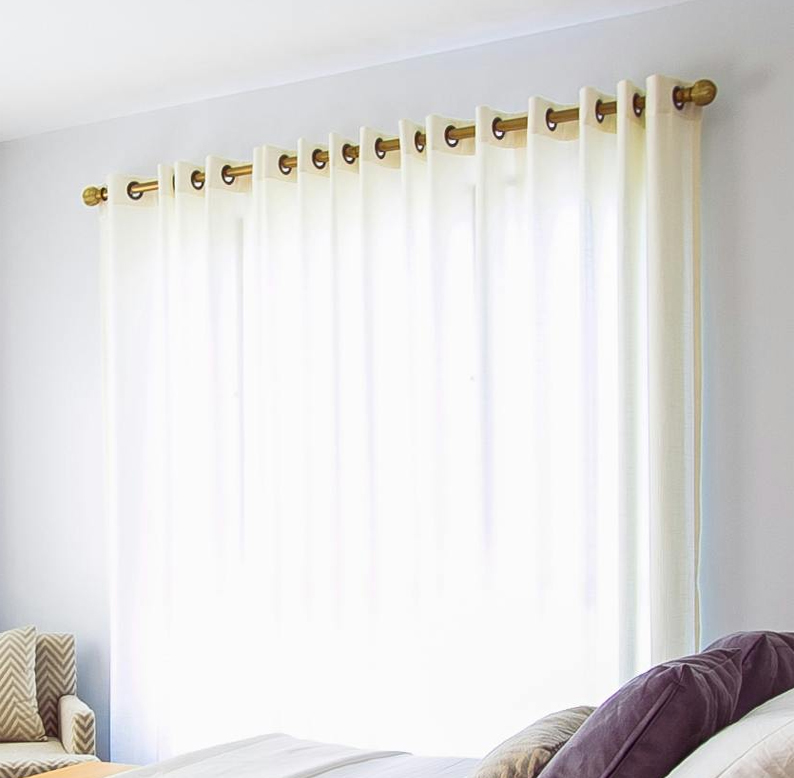
Soundproof curtains are marketed as cheap soundproofing for windows. They are thick and heavy curtains designed to absorb sound, and often double as blackout curtains.
Sound proof curtains are similar to sound blankets, and are made of similar materials. They are most often used in recording studios and other rooms where sound quality is important.
Do soundproof curtains block outside noise?
Kind of.
Also called sound deadening curtains or sound dampening curtains, the purpose of these curtains is not to block outside noise, but actually to absorb sound inside the room. They improve sound quality for recordings and performances, just like the foam panels you see on the walls of recording studios.
Do soundproof curtains work? Yes, quite well – for their intended purpose. If you’re looking to reduce echoes in a room and improve sound quality for streaming or recording, acoustic curtains are a great addition.
They do incidentally block a small amount of noise entering the room due to their mass. Any object with enough mass will block some sound.
How much noise do soundproof curtains block?
So, how effective are soundproof curtains? Can curtains block sound from outside?
Typical noise canceling window curtains have an STC rating of around 25. STC rating, or Sound Transmission Class, is a scale used to measure how well a given assembly blocks sound from passing through.
The best soundproof curtains may block quiet voices and slightly muffle certain high pitch sounds. You can consider this a bonus if you were in the market for sound dampening. For soundproofing, however, the STC rating should be 40 or above.
Even though curtains have enough mass to prevent sound waves from passing through, they lack a proper seal, meaning that sound can escape through the sides, top, and bottom.
Soundproof curtain alternative that works
If you’re trying to soundproof a window, don’t use acoustic curtains. With soundproof curtains, you can expect:
Reduced echoes in the room
Minor soundproofing
Loss of light in your room
Changing your decor
Cumbersome cleaning
The best way to soundproof a room with windows is to simply remove the windows entirely. Solid walls can block much more sound than any soundproofing product on the market.
If you want to keep your windows, however, the clear choice is to install soundproof window inserts. These are low-profile glass panels that fit over your existing window.
Our soundproof window inserts:
Have up to 48 STC rating
Block up to 95% of noise
Allow you to still use the window
Let in light
Are barely noticeable
Are quick to install and renter friendly
We are a full-service company, which means we measure, make, and install your inserts to ensure the best possible fit. This isn’t something you want to DIY – the installation is just as important as the insert itself.
Here’s what the process looks like:
Submit our quick online estimate form with approximate measurements. We’ll get back to you within 3 business days with an estimate.
Schedule a day for us to measure your windows. After this, we can provide you with a fixed quote.
We fabricate your inserts, right here in Texas.
We install your inserts. This process is quick and typically takes less than a day to complete.
Get in touch with us today to start reclaiming your peace and quiet!
Noise pollution is a growing problem, and the World Health Organization has issued statements on its dangers. Despite this, there is simply not enough being done to curb noise pollution. Noise harms us slowly over time – so stopping its effects early is worth every effort.
The question isn’t whether we should reduce noise in our homes, offices, and daily lives – it’s how. Soundproofing is an action you can take right now, and will continue to benefit your family for generations, even when legislation finally catches up.
Some of the most common options for soundproofing windows are:
Replacement windows
Soundproof window inserts, also known as acoustic window inserts
Soundproofing curtains
Soundproof curtains don’t work very well; they lack critical elements that are required for sound insulation for windows, and furthermore block light from coming into your home. Many sound resistant windows on the market are also not as effective as their product pages lead you to believe.
We produce soundproof window inserts that can stop up to 95% of the noise entering your home through a window. These are more effective and efficient than most other solutions on the market, especially for the cost.
You may have some misconceptions and questions about soundproof window inserts. Let’s clear those up with some data.
Do Soundproof Window Inserts Work?
The effectiveness of soundproofing material is measured with a Sound Transmission Class rating, or STC rating. Some average STC ratings include:
Soundproof replacement windows: 44 STC
Soundproof interior walls: 41 STC
Exterior walls: 39 STC
Interior walls: 33 STC
Standard double pane windows: 29 STC
Soundproof curtains: 23 STC
Our window inserts have an STC rating of 48, which is well above the minimum of 40 STC required to be considered “soundproofing.”
So what does that mean in practice?
It means reducing the sounds of a busy highway outside your window to the level of a quiet library. Products with this sound transmission class rating can drop readings on a decibel meter from 52 dB to 36 dB in real-world applications.
Are They Expensive?
Purchasing a soundproof replacement window costs around $900 on average. It also requires more labor, is more invasive to the building, and may not be feasible in all situations – like a historic building or a home regulated by an HOA.
Our soundproof window inserts are significantly cheaper than replacement windows, often as little as half the price. They’re much faster to install, and comply with more codes and regulations than replacement windows. The exact price of an acoustic insert depends on the window; enter your information here for an estimate based on your unique situation.
Are Soundproof Window Inserts Durable?
Like all building materials, windows are subject to the elements all day, every day. Wind, rain, snow, and debris can cause scratches, weaken seals over time, and eventually require a window to be replaced. The lifespan of a window varies by its material, environment, and care, but you can expect to replace most windows after 15 to 30 years of use.
Our acoustic window inserts have lasted over 40 years and counting in real situations. They have the benefit of being installed in the interior, meaning they don’t suffer from contact with the elements. They’re also made from laminated glass which is quite durable, doesn’t scratch easily, and can be maintained like a standard window.
What Do They Look Like?
From the outside, acoustic window inserts are totally undetectable – unlike replacement windows, which can completely change a home’s curb appeal. This is especially important for homeowners whose HOA or other regulations require approval for exterior modifications.
On the inside, they’re still barely noticeable. They have a small, paintable frame – less than 1” thick – and don’t require modifications to your existing windows or window treatments. We offer variants that allow you to still operate your window, keeping them functional as well.
Inserts are the ideal solution for most situations in terms of cost, convenience, and efficiency. Whether you’re ready to commit or are just looking for information, get in touch with us for a free estimate today.
Noise pollution is a growing concern in many homes and offices across Texas. Whether you live near a busy road, work from home, or simply want a quieter environment, a soundproof glass door offers an effective solution for reducing unwanted noise without sacrificing natural light or aesthetic appeal.
What Is a Soundproof Glass Door?
A soundproof glass door is a secondary glass panel installed over or within an existing door opening. It is specially designed to block the transmission of sound while maintaining visibility and access. These doors use laminated acoustic glass and airtight seals to significantly reduce the amount of noise that enters or escapes a room.
When installed in front of your existing exterior door, it creates a double-door system. You open two doors—your original door and the soundproof insert—to enter or exit the space. This dual-layer approach greatly increases sound insulation.
How They Work
Soundproof glass doors minimize noise transfer through a combination of:
Laminated glass layers: Multiple panes of glass bonded with acoustic interlayers trap and absorb sound waves.
Tight sealing around the frame: Precision-fit seals prevent noise from leaking through cracks or gaps around the door jamb.
High STC rating: The Sound Transmission Class (STC) rating measures how well a material blocks sound. A higher STC rating means better sound control.
These elements combine to create a highly effective sound barrier, particularly against high-frequency noise (e.g., traffic, voices, sirens).
Why Homeowners Use Soundproof Glass Doors
Many people install soundproof doors for the same reason they use our soundproof window inserts—to make their home more peaceful and private. Common motivations include:
Reducing road or construction noise
Improving concentration while working from home
Enhancing sleep quality in bedrooms facing a noisy street
Creating quiet home studios, offices, or therapy spaces
Unlike traditional home improvements, soundproof glass doors offer instant relief from persistent noise without requiring a major renovation.
Added Security and Privacy
Soundproof glass doors are made with thick, laminated glass that not only blocks sound but also reinforces your entryway. These inserts are difficult to break through and are often considered burglary deterrents. In this way, they provide both acoustic protection and an extra layer of security.
Benefits of Soundproof Glass Doors
Here are the key advantages of installing a soundproof glass door:
📉 Reduce outside noise by up to 95%
🛡 Add an extra layer of security with laminated safety glass
🌞 Preserve natural light without sacrificing insulation
🏠 Maintain the look of your home—no need to replace your door
⏱ Quick installation—most residential jobs take one day
Get Soundproof Glass Door Inserts in Texas
At Sun and Sound Windows, we specialize in custom-built soundproof glass door inserts that enhance comfort and privacy. We serve residential and commercial properties across Houston, Austin, and Dallas–Fort Worth.
If you’re ready to enjoy a quieter, more peaceful space—without replacing your existing door—contact us for a free estimate. Our inserts are tailored to your door’s dimensions and installed by professionals.
One of the most effective ways to reduce noise in your rooms is to ADD a soundproof glass door to your current exterior door opening. When installed, you would open two doors to go in and out.
What is a Soundproof Glass Door?
A soundproof glass door is a type of door that helps to reduce the amount of noise that comes in and out of a room.
Soundproof glass doors attach to the existing door jamb, thereby creating an initial acoustic glass barrier to unwanted noise before it attacks your existing door. In addition, specialized glass prevents any outside noise from entering the room and any noise inside the room from escaping.
Why Do People Use Them?
Some people live in noisy areas and want to create a peaceful oasis inside their homes. Others work from home and need to minimize distractions and excessive noise. And still, others want to enjoy the peace of their home without outside noise intruding. Whatever the reason, there are several ways to soundproof your home – including installing soundproof glass doors over existing exterior doors
Let’s look at how these unique doors work to keep noise out.
How Does a Soundproof Glass Door Reduce Sound?
Soundproof glass is specially designed to reduce the transmission of sound. It works by using various methods to create an effective barrier that minimizes the transfer of noise. One way soundproof glass does this is by using multiple layers of material. This sandwich construction helps to trap sound waves and prevent them from passing through the door.
Another way soundproof doors work is by sealing around the door’s jamb. This seal helps to block out sound from leaking through cracks and gaps around the door jamb. Soundproof glass doors are also equipped with a higher Sound Transmission Class (STC) rating. This rating indicates how well the door blocks out sound, with a higher number indicating better sound insulation.
Soundproof Glass Doors Reduce Noise Inside Homes
Soundproof glass is specially designed to reduce the transmission of sound in residential homes. This specially designed glass creates an effective sound barrier that minimizes excessive noise from entering the home’s interior.
How Does Soundproof Glass Enhance Home Security?
Besides reducing noise and creating a greater sense of privacy, these thick laminated glass doors are challenging to break through, needing great force to penetrate the glass. These doors are sometimes marketed as “burglary deterrent” doors.
Big Benefits of Using Soundproof Glass
There are many benefits to using soundproof glass over other types of glass.
Here are the main advantages:
Soundproof glass is very effective at reducing excessive noise.
It can provide an extra layer of security for your home or office.
Get Soundproof Glass Inserts in Texas
Installing soundproof glass doors is an effective way to block unwanted noise and create an instant sense of privacy in your home or office.
Contact us today to get an estimate for soundproof glass door installation in Texas!
Read Our Analysis to Find the Best Soundproof Windows.
To compare which windows are best for noise reduction, you want an objective standard – a Sound Transmission Class (STC) rating. An STC rating measures how much sound (in decibels) that a window blocks. The higher the number, the better.
Single-glazed windows are made of one window pane. They have an STC rating of 26 to 28, which means that you can hear soft speech clearly through the window. They block very little sound because they are thin and have the least mass of the windows analyzed here.
Double-Glazed Windows
While double-glazed windows stop more sound than single-glazed windows, they don’t block as much as noise reduction window inserts.
Double-pane windows have an STC rating of 26 to 32. This means you can easily hear loud talking through the window.
Double-pane windows have two layers of glass with an air gap in between them so they block more sound than single-pane windows. Thicker windows, in addition, to stopping more sound, also provide more insulation because they have more mass.
Storm or Impact Windows
An impact window has an STC rating of 32 to 35. Impact windows, or hurricane or storm impact windows, are designed to withstand rain, high winds or falling objects and to stay intact without spraying shards even if they break.
They’re generally made of two pieces of tempered or laminated glass held together with a plastic membrane. They also have frames from heavy-duty materials such as aluminum or vinyl, and they’re more strongly adhered to the glass with a silicone glazing process.
While they are ideal for stopping wind damage, they don’t do a lot more than double-glazed windows to stop sound.
Plastic Noise Reduction Window Panels
Acrylic noise reduction window panels have an STC rating of 42. Lower cost than replacing your windows, they can cut the noise. However, acrylic is plastic and easy to manufacture but also easy to scratch, and it yellows over time.
Sun and Sound Windows used to offer plastic noise reduction window panels; however, customers reported lower satisfaction rates with this option than with laminated glass noise reduction window panels.
Laminated Glass Noise Reduction Window Panels
Laminated glass window inserts have an STC rating of 48, higher than acrylic noise reduction window panels. With an STC rating of 48, loud speech is largely inaudible.
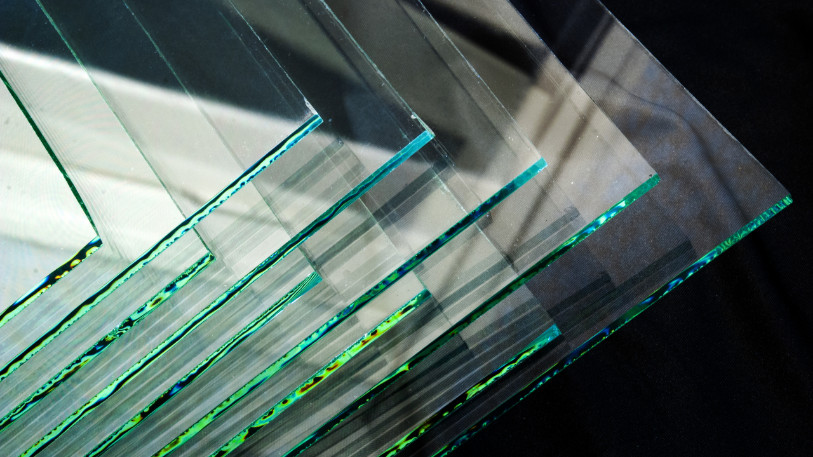
They are made of two layers of glass held together by a membrane, which helps it dissipate noise vibrations.
In addition, our 1/4″ thick laminated glass is denser and has greater mass than 1/4″ acrylic, meaning it stops more sound.
With acoustic grade laminated glass inserts, our customers reported a 95% satisfaction rate.
Getting the Best Noise Reduction Window Is Also About Installation
How you install window inserts is important because you need a good sound trap.
There are three elements of a good sound trap: mass, air gap and seal.
Sufficient mass – Our laminated glass is made from two 1/8″ thick pieces of glass, held together by a flexible membrane, to form one solid piece of glass slightly more than 1/4″ thick. The membrane keeps the glass from vibrating with sound waves.
A good air gap – The two-inch air gap we use is a good rule-of-thumb when trying to stop the sound that you find annoying. The bigger the gap, the more sound waves are trapped.
A good seal – The seal of our soundproofing window inserts is important because sound can act like water, seeping through openings. Our infiltration rate is less than .01 cfm/lineal foot, which exceeds the International Energy Conservation Code (IECC).
As a bonus, the air gap also insulates against energy loss. Our soundproofing window inserts add an R2.5 to your existing window. For example, when installed over a single-pane window, the R rating increases to 3.3, the same as a double-pane, argon-gas-filled window. That is a 60% increase in energy savings per window.
Sun and Sound Glass Noise Reduction Window Inserts
Our windows block noise from street traffic, airplanes, construction, lawn equipment, loud music and air-conditioning units so you can enjoy quiet in your home. Unlike impact windows, they don’t change the look of your home (and are approved for historic houses), and we can usually install them in just a day with no mess.
Sun and Sound Windows uses cookies to improve functionality and to better understand how you use our site, so that we can provide the best possible user experience. By continuing to use our site, you accept our use of cookies and our privacy policy.

 281-336-8685